Education Center

Benefits of Window Tinting
& Paint Protection Film

Discover why thousands of vehicle owners choose professional window tinting and PPF to protect their investment and enhance their driving experience.

99%UV Ray Reduction
70%Heat Reduction
LifetimeFilm Warranty
5 ShadesTo Choose From

Window Tinting Benefits

Window tinting is one of the smartest investments you can make for your vehicle or home. Here's why thousands of Canadians choose professional window tinting every year.
Car Window Tinting Benefits
Window Tinting

How Window Tinting Works

Window tinting involves applying a thin laminate film to the interior or exterior of glass surfaces in vehicles and buildings. The film is made of polyester and contains UV-blocking agents and dyes or metals that reduce light transmission.

Professional installation ensures the film adheres perfectly without bubbles, peeling, or distortion — giving you a clean, factory-like finish that lasts for years with a lifetime warranty.

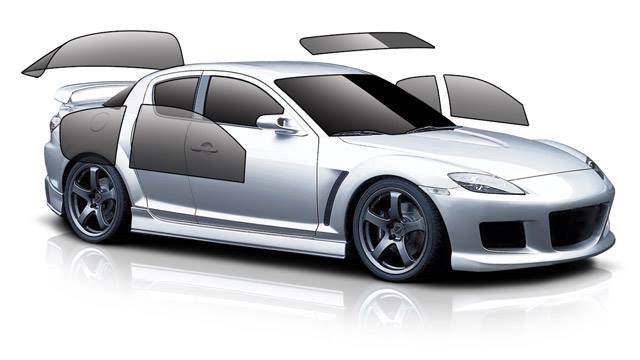
Applied to all windows: front, rear, side doors, and rear quarter panels

Blocks Up to 99% UV Rays

Window tint blocks up to 99% of the sun's harmful UV-A and UV-B cancer-causing rays. This protects both the driver and passengers from long-term skin damage and reduces the risk of skin cancer during daily commutes.

Reduces Heat Up to 70%

Quality window films can reject up to 70% of solar heat, keeping your vehicle or home significantly cooler. This means less reliance on air conditioning, lower energy bills, and a more comfortable environment year-round.

Skin & Eye Protection

Prolonged exposure to UV rays while driving can cause premature skin aging and increase the risk of eye conditions like cataracts. Window tinting acts as a barrier, protecting you every time you're behind the wheel.

Prevents Interior Fading

UV rays and solar heat cause your car's interior — dashboard, seats, door panels — to fade, crack, and deteriorate over time. Window tinting dramatically slows this process, preserving your vehicle's interior and resale value.

Extends Life of Electronics

Heat and UV rays degrade rubber seals, wood trim, and electronic components like your phone, audio system, and speakers. Tinted windows protect all these components, extending their lifespan significantly.

Enhanced Privacy & Security

Darker tints make it harder for outsiders to see into your vehicle, protecting your valuables and giving you greater privacy. In the event of an accident, the film also holds shattered glass together, reducing injury risk.
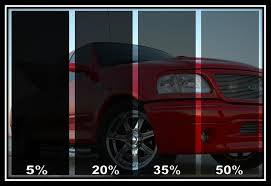
Window Tint Shade Comparison - 5%, 20%, 35%, 50%
Shade Guide

Choosing the Right Tint Shade

Window tint darkness is measured by Visible Light Transmission (VLT%) — the percentage of light that passes through the film. The lower the percentage, the darker the tint.

5% — Limo Tint Maximum privacy. Very dark. Best for rear windows. Blocks the most heat and UV.
20% — Dark Tint High privacy. Popular choice for side and rear windows. Excellent UV and heat rejection.
35% — Medium Tint Balanced privacy and visibility. Great all-around choice. Reduces glare significantly.
50% — Light Tint Subtle shade. Barely noticeable but still provides UV and heat protection.
Get a Tinting Quote

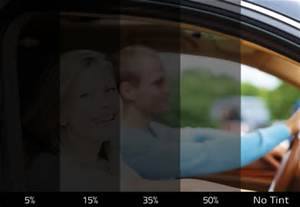
Tint Shade Comparison — Interior View
Window Tint Shade Comparison Interior View - 5%, 15%, 35%, 50%, No Tint
From left to right: 5% (darkest) → 15% → 35% → 50% → No Tint. See the difference in visibility and privacy at each level.

Frequently Asked Questions — Window Tinting

Is window tinting legal in Canada?
Yes, but regulations vary by province. Generally, front side windows must allow at least 70% light transmission. Rear windows and rear side windows typically have no restrictions. We ensure all our installations comply with local regulations.
How long does window tinting last?
With our premium films and professional installation, window tinting can last the lifetime of your vehicle. All our films come with a lifetime warranty against bubbling, peeling, and fading.
How long after tinting can I roll down my windows?
We recommend waiting at least 3–5 days before rolling down your windows to allow the film adhesive to fully cure. In colder weather, this may take up to a week.
Can tinting be removed?
Yes, professional window tint can be removed without damaging the glass. If you ever want to change the shade or remove it entirely, our technicians can do so cleanly and safely.
Now Let's Talk About Paint Protection Film

Paint Protection Film (PPF) Benefits

Paint Protection Film is the ultimate shield for your vehicle's exterior. Here's everything you need to know about why PPF is the best investment for your car's paint.

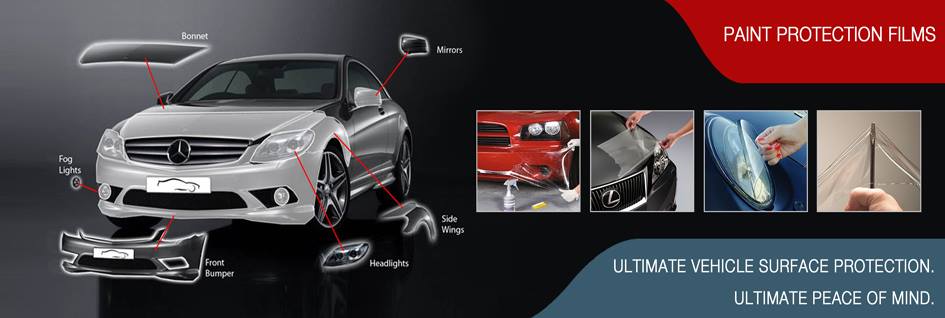
Paint Protection Film - Ultimate Vehicle Surface Protection
Paint Protection Film (PPF) — Ultimate Vehicle Surface Protection. Ultimate Peace of Mind.
What is Paint Protection Film
PPF

What is Paint Protection Film?

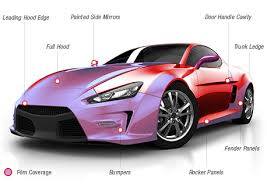
Paint Protection Film (PPF) is a clear, thermoplastic urethane film applied to the painted surfaces of a vehicle to protect the paint from stone chips, bug splatter, minor abrasions, and other environmental contaminants.

The film is virtually invisible once applied — it preserves the original look of your vehicle while providing an incredibly tough protective layer. The adhesive is non-corrosive and will not damage any paint underneath.

PPF can be applied to virtually any painted surface on your vehicle, including the hood, bumpers, fenders, mirrors, door handles, rocker panels, and more.

Self-healing technology — minor scratches disappear with heat exposure

Scratch & Chip Protection

PPF absorbs the impact of road debris, stones, and gravel that would otherwise chip or scratch your paint. The thick urethane layer acts as a sacrificial barrier, taking the damage so your paint doesn't have to.

Non-Corrosive Adhesive

The adhesive used in PPF is specially formulated to be non-corrosive. It bonds securely to your paint without causing any damage, and when removed, it leaves no residue or marks behind.

Preserves Paint Luster & Shine

PPF is optically clear, meaning it doesn't alter the appearance of your paint. Your vehicle's color, gloss, and shine remain completely intact — in fact, many PPF products enhance the depth and clarity of your paint.

Bug Splatter & Chemical Resistance

Bug acids, bird droppings, tree sap, and road tar can etch into your paint permanently. PPF creates a chemical-resistant barrier that prevents these contaminants from reaching your paint surface.

Self-Healing Technology

Premium PPF films feature self-healing properties. Minor swirl marks and light scratches in the film disappear on their own when exposed to heat (sunlight or warm water), keeping the film looking pristine.

Protects Resale Value

A vehicle with pristine, chip-free paint is worth significantly more at resale. PPF is one of the best investments you can make to maintain your vehicle's value over time — often paying for itself when you sell.

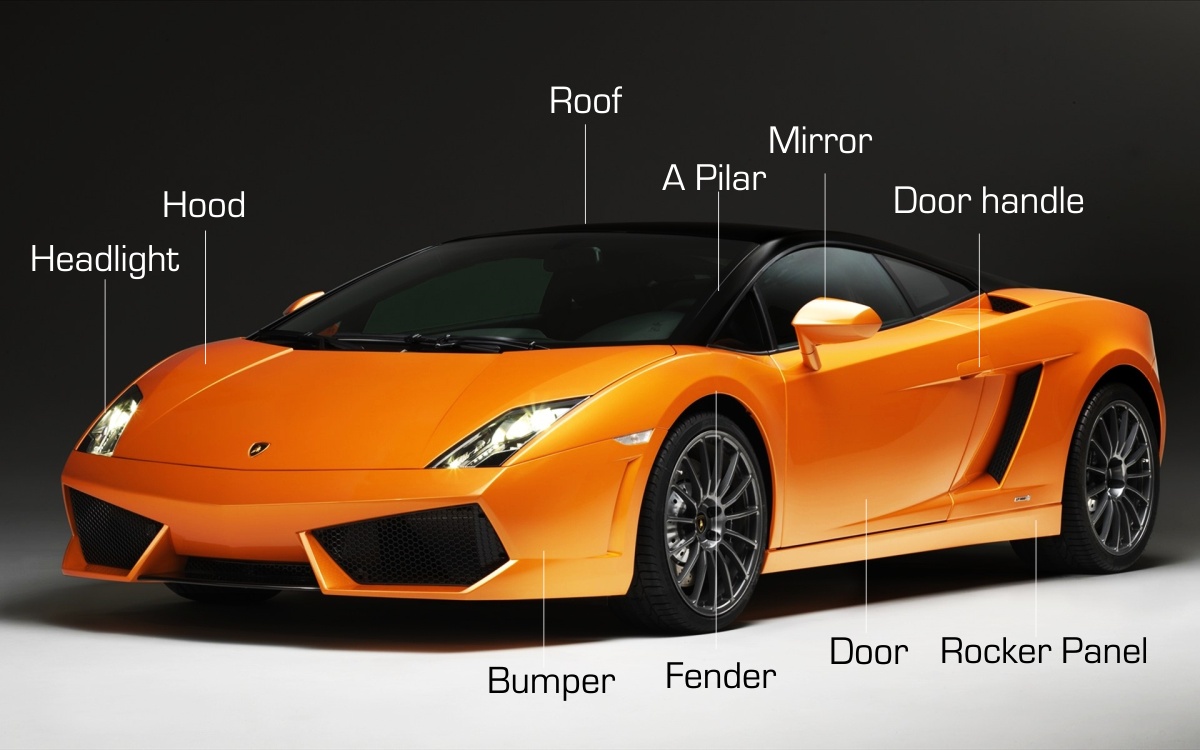
PPF Coverage Areas - Hood, Roof, Mirror, A Pilar, Door Handle, Bumper, Fender, Door, Rocker Panel
Coverage Areas

Where Can PPF Be Applied?

PPF can be applied to virtually any painted surface on your vehicle. The most common areas that benefit from protection are the high-impact zones that face the most road debris and environmental exposure.

Hood & Full Hood
Roof
Front & Rear Bumper
Fenders
Doors & Door Edges
Door Handle Cavities
Side Mirrors
A-Pillars
Rocker Panels
Headlights & Fog Lights
Trunk Ledge
Bonnet & Side Wings
Get a PPF Quote

Frequently Asked Questions — Paint Protection Film

Is PPF visible on the car?
High-quality PPF is virtually invisible once installed. It's optically clear and conforms perfectly to the contours of your vehicle. Most people can't tell it's there — your paint looks exactly the same, just protected.
How long does PPF last?
Premium PPF films typically last 5–10 years or more with proper care. The film is designed to withstand harsh weather, UV exposure, and daily driving without yellowing, cracking, or peeling.
Can PPF be removed?
Yes. PPF can be professionally removed without damaging the underlying paint. The non-corrosive adhesive ensures your paint remains in perfect condition after removal.
Can I wash my car normally with PPF?
Absolutely. You can wash your car normally after PPF installation. We recommend waiting 48 hours after installation before washing. Avoid high-pressure washing directly at the film edges.

Tinting vs. PPF — Which Do You Need?

Both services offer incredible benefits. Many of our clients choose to combine both for maximum protection and comfort.

Feature Window Tinting PPF
UV Ray Protection✓ Up to 99%✓ Yes
Heat Reduction✓ Up to 70%✗ No
Privacy Enhancement✓ Yes✗ No
Paint Scratch Protection✗ No✓ Yes
Rock Chip Protection✗ No✓ Yes
Bug & Chemical Resistance✗ No✓ Yes
Interior Fading Prevention✓ Yes✗ No
Glare Reduction✓ Yes✗ No
Self-Healing✗ No✓ Premium Films
Resale Value Protection✓ Yes✓ Yes
Lifetime Warranty✓ Yes✓ Yes

Not sure which service is right for you? Contact us for a free consultation!

Get a Free Quote